
The healthcare sector in the United States is facing a convergence of mounting challenges—from rising operational costs and regulatory burdens to growing patient demands and staffing shortages. Amidst this complex landscape, healthcare outsourcing has become a strategic necessity for organizations aiming to deliver high-quality patient care while maintaining financial sustainability. Outsourcing allows healthcare providers to delegate non-core and even some clinical tasks to third-party specialists, ensuring operational excellence, compliance, and better patient outcomes. This guide provides an in-depth exploration of the healthcare roles most commonly outsourced, the core benefits of outsourcing, the most important aspects of managing outsourced functions, and future trends that will shape the healthcare outsourcing space in the coming years.
Overview of Healthcare Outsourcing
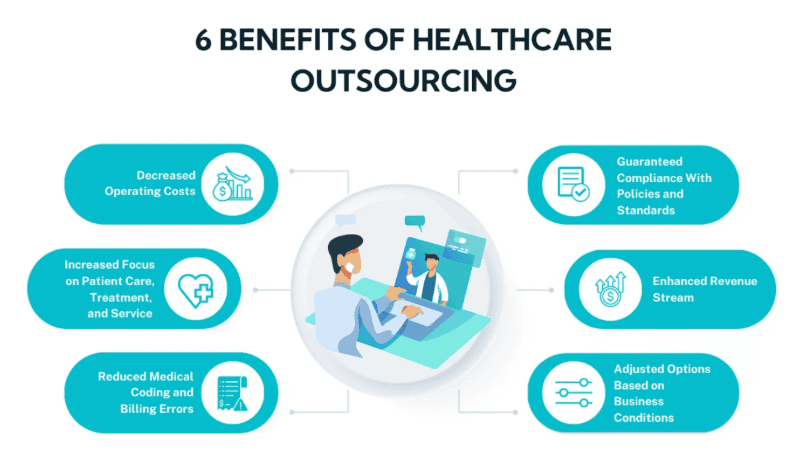
Healthcare outsourcing involves transferring the responsibility of specific business processes or services to external vendors who possess the required expertise and infrastructure to execute them efficiently. Initially popular for administrative tasks, outsourcing in healthcare has evolved to include various clinical and technical functions. The practice not only helps healthcare organizations cut down on costs but also ensures timely delivery of services, adherence to compliance norms such as HIPAA, and access to industry-leading technology and talent. A significant driver of this trend is the ongoing digital transformation in healthcare, which demands continual upgrades in IT capabilities, cybersecurity measures, and data analytics—areas where third-party providers often outperform in-house teams. As outsourcing grows more sophisticated, healthcare organizations are increasingly leveraging it as a core operational strategy rather than a stopgap measure.
Medical Billing and Coding
Medical billing and coding are fundamental to the healthcare revenue cycle, and any errors in these processes can lead to claim denials, delayed reimbursements, and compliance issues. Outsourcing medical billing and coding to specialized vendors offers access to experienced professionals well-versed in ICD-10, CPT, and HCPCS coding systems. These providers typically employ advanced billing software and stay current with frequent changes in payer policies and federal regulations, ensuring accuracy and efficiency. Healthcare providers benefit from faster billing cycles, higher claim acceptance rates, and significant cost savings. Additionally, outsourcing minimizes the need for internal training and certification, which can be resource-intensive.
While outsourcing provides numerous benefits, it also presents certain challenges that organizations must navigate carefully. Data security is a primary concern, especially given the stringent HIPAA regulations governing patient information. Healthcare providers must ensure that outsourcing partners have robust data protection measures, including encryption, secure access controls, and regular audits. Another challenge is vendor reliability; poor performance or communication lapses from an outsourced partner can disrupt workflows and harm patient trust. Time zone differences, language barriers, and cultural nuances can further complicate communication. Quality control is another crucial factor, requiring regular performance monitoring and audits to maintain service standards. Lastly, regulatory compliance must be continuously monitored to ensure that outsourced services align with evolving healthcare laws and guidelines. Addressing these challenges requires thorough due diligence and the establishment of clear governance structures.
Best Practices for Managing Outsourced Roles
Successfully managing outsourced healthcare roles requires a strategic approach that balances cost-effectiveness with quality assurance. The first step is to define clear objectives and outcomes for the outsourced functions. This includes specifying performance metrics, timelines, and compliance requirements in a detailed service level agreement (SLA). Conducting comprehensive due diligence during vendor selection is also essential, focusing on factors such as industry experience, certifications, client references, and technological capabilities. Once a partnership is established, open and continuous communication becomes critical. Regular meetings, progress updates, and performance reviews help maintain transparency and address any issues proactively. Healthcare providers should also implement robust monitoring systems to track key performance indicators (KPIs) such as turnaround times, error rates, and patient satisfaction scores. Additionally, having contingency plans in place ensures business continuity in case of disruptions. Investing in relationship management and fostering a collaborative culture with outsourcing partners can significantly enhance the success of outsourcing initiatives.
Future Trends in Healthcare Outsourcing
The landscape of healthcare outsourcing is evolving rapidly, driven by technological advancements and changing patient expectations. Artificial intelligence (AI) and machine learning are set to revolutionize outsourced services such as medical coding, imaging analysis, and customer support by enhancing accuracy and reducing turnaround times. Robotic Process Automation (RPA) is increasingly being used to automate repetitive administrative tasks like data entry, claims processing, and patient onboarding, further boosting efficiency. The growing demand for value-based care is also influencing outsourcing strategies, as healthcare organizations seek partners who can contribute to improved patient outcomes and not just cost savings. Another emerging trend is the use of global talent pools, enabling 24/7 service availability and faster turnaround times for clinical and non-clinical functions. As regulatory landscapes become more complex, compliance-focused outsourcing is gaining prominence, with vendors offering specialized expertise in navigating healthcare laws and standards. These trends highlight the need for healthcare providers to adopt a forward-looking approach to outsourcing, treating it as a strategic asset rather than a transactional decision.
Conclusion
In an era marked by unprecedented challenges and rapid innovation, healthcare outsourcing has emerged as a vital strategy for organizations aiming to deliver high-quality, cost-effective care. From medical billing and IT support to clinical diagnostics and telehealth, the scope of outsourcing in healthcare continues to expand, offering a myriad of opportunities for efficiency, scalability, and enhanced patient experiences. However, to fully realize these benefits, healthcare providers must approach outsourcing with diligence, strategic intent, and a commitment to continuous improvement. By selecting the right partners, implementing robust management practices, and staying attuned to emerging trends, healthcare organizations can transform outsourcing from a support function into a cornerstone of their operational strategy. For tailored outsourcing solutions that meet the unique needs of your healthcare business, send us an inquiry using our contact page.