
In the current global economic climate, the decision to engage offshore talent has evolved from a tactical cost-saving measure into a sophisticated operational imperative. For the modern SMB, the primary challenge is no longer finding a remote worker, but rather integrating a "SuperWorker"—a high-capacity, AI-augmented professional who can operate as a seamless extension of the domestic core. The "Ultimate Offshore Recruitment Checklist" is therefore not a simple list of tasks, but a comprehensive architectural blueprint designed to mitigate the risks of information asymmetry and operational friction. By moving beyond the archaic resume-based screening process and adopting a rigorous, data-driven methodology, organizations can transform their offshore recruitment into a predictable performance engine. This evolution requires a deep commitment to the strategic principles of criteria clarification, stakeholder consensus, and rigorous benchmarking, all of which serve to ensure that every new hire delivers disproportionate business value from day one.
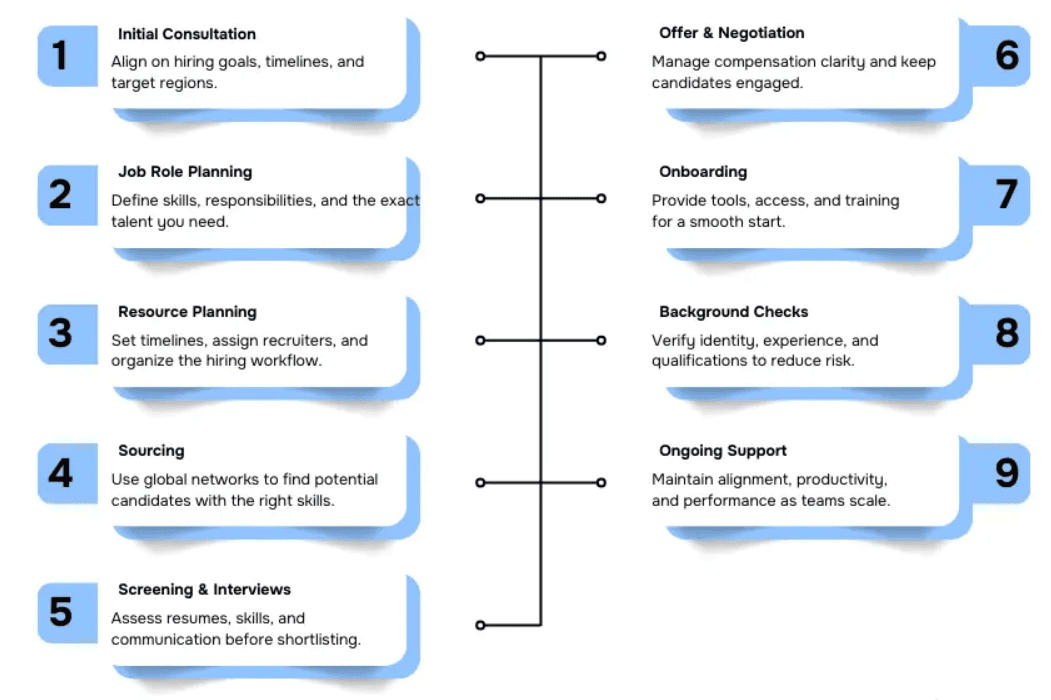
The cornerstone of any successful offshore recruitment strategy is the move from broad, generic job descriptions toward highly specific "Success Profiles." In the 2026 talent market, the speed of technological evolution means that skills have a shorter half-life than ever before, making traditional qualifications less relevant than a candidate’s capacity for cognitive resiliency and technological stewardship. Criteria clarification involves an intensive internal audit where leadership identifies not just what a candidate will do, but the specific business outcomes they are expected to drive. This means defining the role in terms of its contribution to the value chain, such as increasing development velocity by $20\%$ or reducing customer response latency. By articulating these metrics upfront, the enterprise provides its recruitment partners with a clear "North Star," ensuring that the search is focused on individuals who possess the rare combination of niche technical skills and the proactive communication habits required for remote success.
Furthermore, this clarification process must account for the "Augmented Reality" of modern work, where a candidate’s fit is increasingly determined by their ability to leverage agentic AI and automated workflows. A successful offshore developer or operational specialist is no longer just a manual executor of tasks; they are a manager of digital assistants. Therefore, the checklist must include a evaluation of the candidate’s "Digital Literacy" and their familiarity with the specific technology stack of the SMB. When an organization invests the time to clarify these nuanced criteria, they effectively de-risk the entire recruitment funnel. This precision ensures that the shortlisting process is governed by objective requirements rather than subjective impressions, ultimately leading to a hire that is perfectly calibrated to the firm’s long-term growth trajectory.
Resource Fit Consensus: Orchestrating Internal Alignment for Global Success
Even the most technically proficient offshore hire can fail if they are introduced into an organization that lacks internal alignment on their role and purpose. Resource Fit Consensus is the mechanism by which an SMB ensures that all relevant stakeholders—from the direct manager to the cross-functional team leads—are in total agreement regarding the candidate's operational integration. This roadblock is often overlooked in domestic hiring but is magnified tenfold in an offshore context, where geographical distance can exacerbate any pre-existing organizational silos. A reliable BPO partner facilitates this consensus by involving key internal players early in the selection process, ensuring that the "fit" is assessed from multiple perspectives. This collective buy-in is critical because it prevents the new hire from becoming a "Remote Island," isolated from the cultural and strategic pulse of the main office.
Achieving this consensus requires a structured feedback loop where stakeholders evaluate candidates against a unified scorecard that balances technical competency with behavioral synchronicity. In 2026, the focus of this fit is increasingly on "Cultural Contextualization"—the candidate's ability to understand the subtle professional norms and expectations of a Western business environment. By fostering a shared understanding of what constitutes a "good fit" before an offer is extended, the SMB owner creates a supportive ecosystem that is ready to receive and accelerate the new team member. This internal synchronization reduces the "onboarding drag" that often plagues offshore engagements and ensures that the domestic team views the new hire as a valuable peer rather than an external contractor. Ultimately, consensus is the catalyst that transforms a group of remote individuals into a high-performance global workforce.
Evaluation Benchmarking: The Science of Performance Validation
The final and most rigorous component of the offshore recruitment checklist is the implementation of Evaluation Benchmarking. In a global market where candidates have access to the same generative tools as their employers, the risk of "competency inflation" is high. To solve this, SMBs must utilize standardized, data-driven benchmarks to validate a candidate’s true operational ceiling. This involves subjecting candidates to "Work Sample Auditions" and "Stochastic Interviewing" techniques, where their performance is measured against a baseline of industry-leading performers. Evaluation benchmarking removes the "gut feeling" from the hiring process and replaces it with empirical evidence, allowing the business owner to see exactly how a candidate handles a high-pressure, ambiguous task in real-time. This level of validation is what separates a world-class recruitment firm from a traditional staffing agency.
Beyond the initial assessment, benchmarking serves as a continuous performance monitor that allows the enterprise to track the growth of its offshore assets over time. By comparing the output of the offshore team against the productivity metrics of the domestic core, leadership can identify areas for upskilling and process optimization. This data-driven approach is particularly vital in 2026, as companies move toward a "Talent Density" mindset, where the focus is on maximizing the impact of each individual employee rather than simply increasing headcount. When an SMB owner adopts a rigorous benchmarking protocol, they are not just making a hire; they are making a strategic investment in a proven resource whose value has been verified against a global standard of excellence. This objective validation provides the foundation for a high-trust, high-velocity partnership that can scale as the business evolves.
The Governance Layer: Ensuring Compliance and Institutional Resilience
While criteria, consensus, and benchmarking form the core of the selection process, the ultimate checklist is incomplete without a robust layer of governance. For the SMB, navigating the legal complexities of international labor law, data privacy regulations like GDPR, and intellectual property protection can be a significant barrier to entry. A reliable BPO hiring firm covers these aspects by acting as the Employer of Record (EOR), providing a secure, compliant infrastructure that shields the business from liability. This includes ensuring that all contracts are locally enforceable and that technical security protocols—such as multi-factor authentication and endpoint management—are rigorously applied to all remote environments. In an era where $80\%$ of security breaches are linked to weak remote access protocols, this "Compliance Safeguarding" is not just a checkbox; it is a critical defensive measure that protects the firm’s most valuable intellectual assets.
In conclusion, the journey to offshore recruitment success is a sophisticated undertaking that requires a blend of strategic foresight and operational discipline. By focusing on criteria clarification, resource fit consensus, and evaluation benchmarking, SMB owners can overcome the traditional roadblocks to global hiring and build a workforce that is resilient, agile, and perfectly aligned with their business objectives.